How it started
At first, it was only an unpleasant smell near the septic area. That made it dangerously easy to dismiss.
Our garden had always been one of the best parts of the house. It was surrounded by trees, and it was where I expected my family—especially my grandchildren—to feel free to play.
Then the smell around the septic tank became impossible to ignore. Standing water began appearing near the cover, and what had once felt like a private maintenance issue became visible to everyone who came through the yard.
I felt ashamed to welcome guests. My daughter did not want the grandchildren playing close to the affected area, and I understood her concern. Instead of enjoying the garden, I was watching where everyone stepped and wondering whether the system was getting worse beneath the ground.
The septic problem had not taken away my garden. It had taken away my ability to enjoy it without worry.
The possible repair cost made the situation heavier. I knew ignoring it could become expensive, but I also did not want panic to push me toward believing that a tablet could repair every mechanical or structural problem.
I wanted a practical maintenance step I could use myself, with a mechanism that made sense and a clear boundary for when professional service would still be necessary.
The moment I could no longer minimize it
When my grandchildren stopped feeling welcome in the garden, the septic problem stopped being “something I would handle later.”
The odor was embarrassing, but seeing the family avoid part of our home was what changed the urgency for me. My daughter was worried about the children playing near the standing water, and I could no longer pretend the issue affected only me.
A major repair was not an easy option for our budget. At the same time, doing nothing felt reckless. I needed to understand whether the system might benefit from biological maintenance before the problem grew—and what warning signs meant I should stop experimenting and call a professional.
That was the turning point: I stopped searching for a product that promised to “fix everything” and started looking for a monthly routine that could support the living process inside the tank.
What I checked first
I had to separate a maintenance problem from the kinds of failure no additive can repair.
01
I looked beyond the smell
Odor can be a useful signal, but its disappearance alone does not prove that a damaged line, overloaded tank, or failing drain field has been repaired.
02
I reviewed what went down our drains
Heavy bleach use, grease, wipes, and other materials can work against a healthy septic routine. A tablet would not make careless household habits harmless.
03
I kept professional service in the picture
Biological treatment may support organic-waste breakdown. It cannot rebuild a drain field, straighten a collapsed pipe, or remove non-biodegradable obstructions.
The idea that changed my search
What if the tank did not need another harsh chemical—and what if the biological environment was part of the problem?
A septic tank depends on microorganisms to help break down organic waste. That made bacterial balance, pH, oxygen, household chemicals, tank capacity, and ordinary maintenance part of the same picture.
This did not erase the need for pumping, inspection, or repair. It simply gave me a clearer reason to consider a treatment designed around bacterial activity rather than another product that only masked odor.
For the first time, the question was not “How do I cover the smell?” It was “What conditions does the system need to process waste more effectively?”
That distinction made Septifix easier to evaluate. Its mechanism brings together aerobic bacteria, oxygen release, and pH regulation in a tablet simple enough to add to a monthly home-maintenance routine.
What Septifix Is
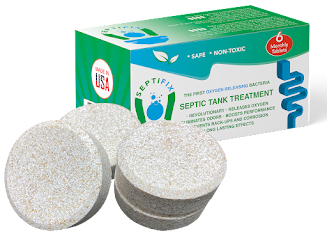
I did not need another product that only covered the smell. I wanted a clear reason for every part of the formula.
Septifix is a dissolvable septic tank treatment tablet designed to be flushed through a household toilet. The current presentation describes each 55-gram tablet as a combination of aerobic bacterial strains, oxygen-releasing compounds, and pH-regulating compounds.
What made it stand out to me was not one oversized promise. It was the way the three parts of the formula were designed to work together inside the septic environment.
My monthly routine
An initial treatment based on tank size, followed by one tablet each month, was simple enough to become automatic.
The starting number of tablets depends on septic tank capacity. I would use the current directions supplied with the product rather than copying another homeowner’s dose. After the initial treatment, the stated maintenance routine is one tablet flushed down a toilet monthly.
The most important adjustment was mental: I stopped treating the tablet as a substitute for the septic system’s real maintenance needs. I marked one date each month, kept harmful waste out of the drains, and paid attention to whether the warning signs actually changed.
I also kept the boundary clear. If sewage backed up, standing wastewater persisted, or drainage worsened, I would call a qualified septic professional instead of repeatedly adding tablets.
How the change felt
The first benefit was not a dramatic announcement. It was walking into the garden and noticing that the smell was no longer the first thing on my mind.
I had become used to checking the septic area before anyone visited. So progress was measured in ordinary signs: less odor, no new standing water, and a yard that began feeling like part of our home again.
Following the tank-size directions
I treated the initial dose as a practical instruction, not a guarantee. I noted the condition of the septic area so I could compare real changes.
The odor began to fade
The experience described in the product story starts with reduced odor. I would treat that as encouraging, while continuing to watch drainage and standing water.
One tablet each month
Once the initial treatment was complete, monthly use became the simple part: one tablet, one reminder, and continued attention to normal septic care.
I did not suddenly forget that the house had a septic system. I simply stopped letting every visit to the garden begin with the same anxious inspection.
That is the benefit that matters most to me: not talking endlessly about septic maintenance, but helping the system return to the background where it belongs.
Inside the formula
I stopped looking at the tablet as a single ingredient and started seeing the three functions behind the monthly routine.
The current sales material confirms the main categories and several quantities, but it does not publish the identity and proportion of every bacterial strain. I would judge only what can be verified.
14 aerobic bacterial strains
Organic-waste breakdown. The formula is described as containing more than 10 billion bacteria per gram, intended to work on biodegradable residue inside the tank.
Oxygen-releasing compounds
Support for aerobic activity. The offer states that each tablet can release up to 10 liters of oxygen as it dissolves.
Sodium carbonate
pH buffering. It is described as helping move wastewater toward a more neutral pH, creating conditions intended to support bacterial activity.
Dissolvable tablet matrix
Simple delivery. The solid format lets the formula travel through the toilet into the tank without direct handling.
What I liked most
Septifix made the most sense to me when I judged it as a complete maintenance routine—not a universal repair promise.
✓A routine I could actually follow. One tablet per month after the initial treatment is easy to remember.
✓No direct tank handling. The tablet is flushed through the toilet, keeping the routine straightforward.
✓A multi-part mechanism. Aerobic bacteria, oxygen release, and pH regulation each have a clear role.
✓A one-time payment. The current offer states that packages do not renew automatically.
✓A real evaluation window. The current offer includes a 60-day money-back guarantee.
Who may relate to this review
This is for the homeowner who wants to protect the quiet enjoyment of the house before septic worry begins controlling every decision.
It may resonate if odor, slow drainage, or concern about organic buildup has made you more aware of the septic system than you ever wanted to be.
Septifix may appeal if you have a functioning residential septic system and want a convenient monthly treatment aimed at bacterial activity and organic-waste breakdown. It is not a stand-alone answer for sewage backing into the home, collapsed lines, recurring wastewater, or drain-field failure. Those situations require a qualified professional.
Septifix complaints and negative reviews
I went looking for reasons not to buy. These are the objections I would take seriously before ordering.
1
“Can a tablet really fix every septic problem?”
No maintenance additive can correct every cause of septic failure. The biggest mismatch would be expecting a biological treatment to repair structural or mechanical damage.
2
“Does this mean I never need pumping?”
Real pumping schedules depend on tank size, household load, solids, system design, and local guidance. I would not cancel a needed service based on a universal promise.
3
“Why does the initial dose vary?”
The starting treatment depends on tank capacity. Buyers should know their tank size and follow the current chart rather than assuming another homeowner’s dose applies to them.
4
“What if I see no meaningful change?”
I would document the order, review the refund instructions, and monitor real system symptoms. If the problem persisted or worsened, I would call a professional.
Quality and sensible expectations
What gave me confidence was not the loudest claim. It was knowing what the tablet could reasonably support—and what it could not repair.
The current material describes Septifix as a non-toxic tablet without harsh chemicals and manufactured in the United States. The package directions should remain the reference for tank size, initial treatment, monthly use, handling, and storage.
I would keep the tablets dry and away from children and pets, avoid swallowing or direct contact, and follow local septic guidance. The product does not make wipes, grease, or other unsuitable waste safe to flush.
Sewage backup, persistent standing wastewater, widespread slow drains, or suspected structural failure deserves prompt professional inspection. A monthly treatment can be part of maintenance; it should not delay a necessary repair.
Price and package
If I were ordering today, I would compare the packages by cost per box and by how long I genuinely plan to maintain the monthly routine.
The current presentation lists the best-value 18-month package at $49 per six-month box, or $147 total.
The 12-month option is listed at $59 per box, or $118 total, while the six-month package is listed at $69 plus shipping. The current offer states that the 12- and 18-month packages include free shipping.
For me, the 18-month option only makes sense if I know my tank size, understand the directions, and intend to continue monthly maintenance. If I were uncertain, I would choose the package that fits my actual plan and budget rather than buying more only because the unit price is lower.

Purchase protection

The 60-day guarantee is what made trying Septifix feel like an evaluation—not a blind commitment.
The current offer states that orders are protected by a 60-day, 100% money-back guarantee. If I were ordering, I would read the current refund instructions, save my confirmation email, and keep the packaging or unused tablets as required by the policy.
The practical Septifix FAQ
The questions I would want answered before clicking “order.”
How do I use Septifix?
The current directions base the initial number of tablets on tank size, followed by one tablet flushed down a toilet each month. Follow the instructions supplied with the product.
What is Septifix designed to support?
It is positioned as a monthly septic-system treatment intended to support bacterial activity, odor control, and organic-waste breakdown.
What is inside the Septifix tablets?
The offer describes 55-gram tablets containing 14 strains of aerobic bacteria, oxygen-releasing compounds, and pH-regulating compounds including sodium carbonate.
Does Septifix replace pumping or repairs?
I would view it as a maintenance product, not a guaranteed replacement for inspection, pumping, or structural repair. Serious or persistent problems require a qualified professional.
Is this a subscription?
The current offer describes each package as a one-time purchase without automatic rebilling. Confirm the final terms at checkout.
What is the refund period?
The current offer states that orders are covered by a 60-day money-back guarantee, subject to the published refund terms.
My final verdict
I did not want septic maintenance to become the center of life at home. I wanted a simple habit that could help keep the system in the background.
Septifix earned my attention because its mechanism is easy to understand: a dissolvable tablet combining aerobic bacteria, oxygen release, and pH regulation in a monthly routine.
My reason for recommending a careful look is more personal. I know what it feels like to be embarrassed by the smell, to watch the grandchildren avoid the garden, and to wonder whether ignoring the system will turn into an expensive disruption.
I would consider Septifix for ongoing maintenance or as a cautious step when the concern appears related to organic buildup or bacterial balance. I would not rely on it to repair physical damage, and I would not allow a temporary reduction in odor to delay a needed inspection.
The question that moved me was not “Can one tablet solve everything?” It was “Is there a simple maintenance step I can start before ignoring the system costs me more?”